Trevithick, Puffing Billy, the Stephensons and Rocket
Put an engine on wheels and things get exciting. Also heavy. The rails kept breaking.
First, a road carriage
Nicholas-Joseph Cugnot built a clumsy steam carriage for roads in France as early as 1769. Encyclopaedia Britannica: steam engine
Richard Trevithick, the “strong steam” man
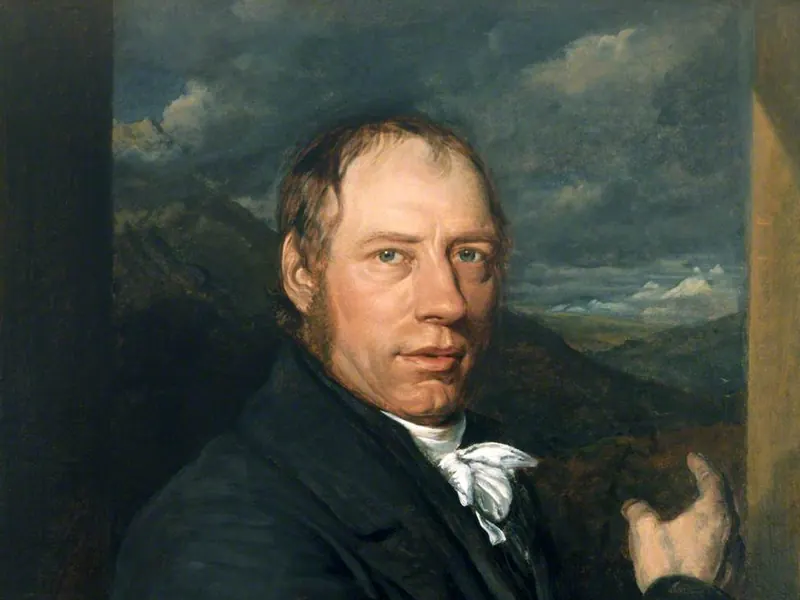
Richard Trevithick was born on 13 April 1771 in Illogan, Cornwall. Encyclopaedia Britannica: Richard Trevithick A schoolmaster called young Trevithick “disobedient, slow and obstinate”. Encyclopaedia Britannica: Richard Trevithick
His father, a mine manager, thought he was a loafer, and Trevithick stayed barely able to read and write all his life. Encyclopaedia Britannica: Richard Trevithick
Watt thought “strong steam” (high pressure) was too dangerous to harness; Trevithick went for it anyway. Encyclopaedia Britannica: Richard Trevithick
Trevithick built 30 small high-pressure engines that could be carried on an ordinary farm wagon. They were known as “puffer whims”. Encyclopaedia Britannica: Richard Trevithick
The first railway locomotive
Richard Trevithick built a small model locomotive in 1797 to test his ideas. Science Museum blog: Steam train in Kensington Gardens Trevithick built the world’s first steam railway locomotive in 1804. Science Museum blog: Steam train in Kensington Gardens
On 21 February 1804 a Trevithick engine won a bet by hauling 10 tons of iron and 70 men along 10 miles of tramway. Encyclopaedia Britannica: Richard Trevithick Trevithick’s 1804 run was on a horse tramway in Wales. Encyclopaedia Britannica: steam engine
In 1808 his locomotive Catch-me-who-can ran on a circular track near Euston Road in London. Encyclopaedia Britannica: Richard Trevithick
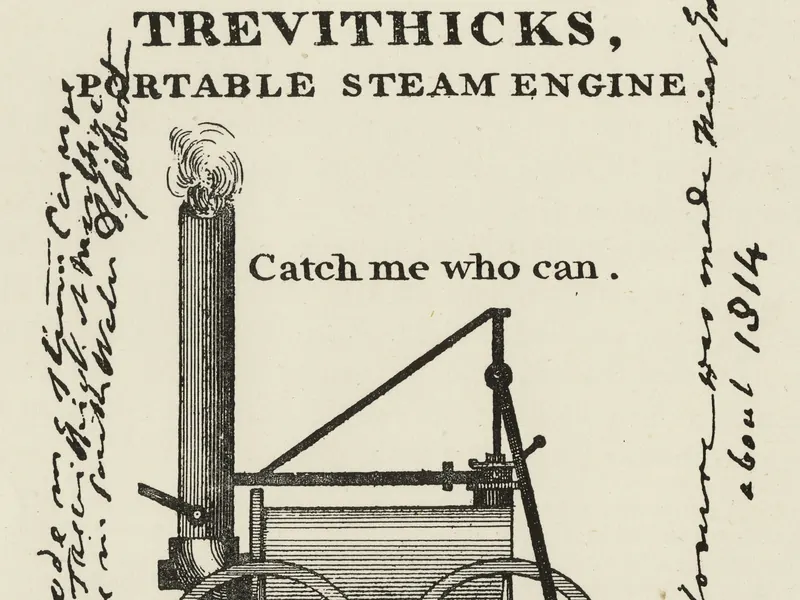
The trouble was the track: cast-iron rails were too brittle for heavy engines. Encyclopaedia Britannica: Richard Trevithick
Nine of Trevithick’s engines were ordered for silver mines in Peru, and he sailed to South America in 1816. Encyclopaedia Britannica: Richard Trevithick
Puffing Billy
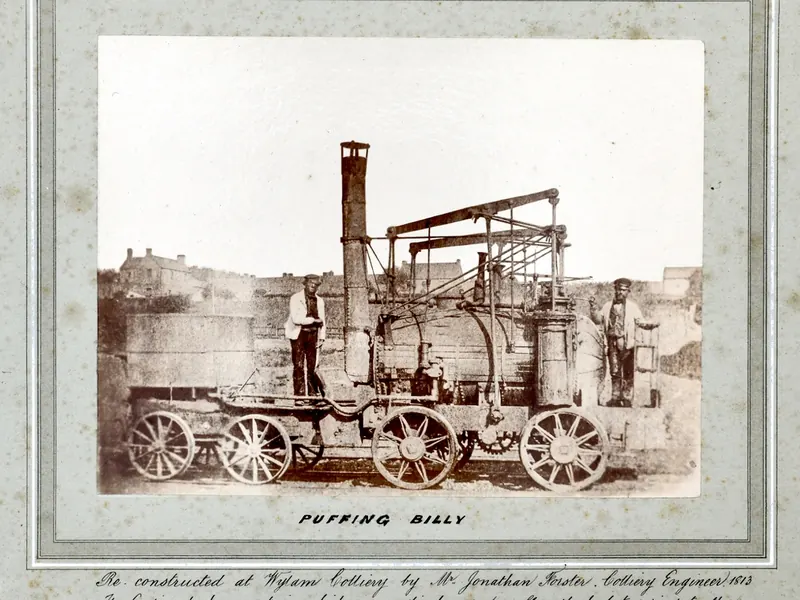
Puffing Billy, built in about 1814 by William Hedley, is the oldest surviving steam locomotive in the world. Science Museum blog: Steam train in Kensington Gardens
In 1812 Hedley built a test rig to check whether smooth wheels could grip smooth rails. Science Museum blog: Steam train in Kensington Gardens
George Stephenson
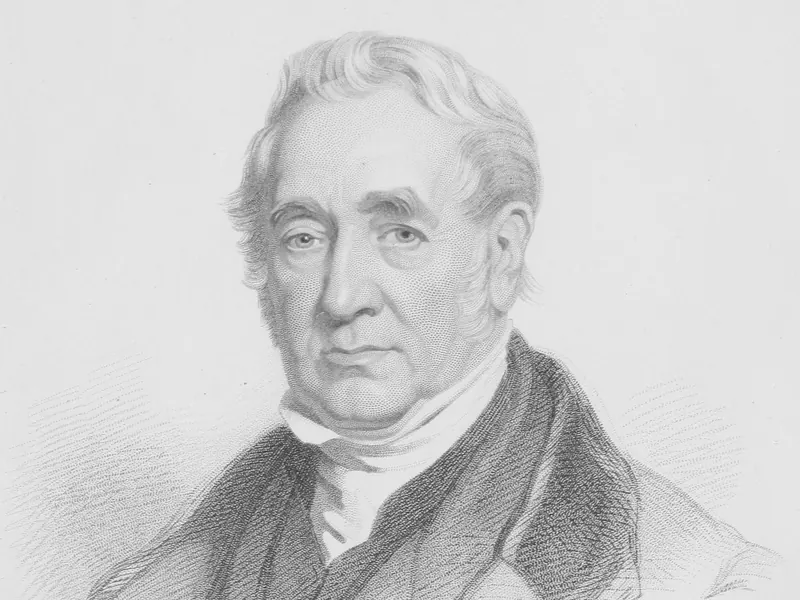
George Stephenson was born on 9 June 1781 at Wylam, near Newcastle. Encyclopaedia Britannica: George Stephenson By the age of 19 he was running a Newcomen engine. Encyclopaedia Britannica: George Stephenson
He went to night school to learn to read and write. Encyclopaedia Britannica: George Stephenson To earn extra money he learned to mend shoes and fix clocks. Encyclopaedia Britannica: George Stephenson
He became engine wright (chief mechanic) at Killingworth colliery. Encyclopaedia Britannica: George Stephenson
His engine Blucher pulled eight wagons carrying 30 tons of coal at 4 mph (6 km/h). Encyclopaedia Britannica: George Stephenson
Stephenson used the “steam blast”: exhaust steam sent up the chimney pulling air after it and boosting the draught. Encyclopaedia Britannica: George Stephenson
Robert Stephenson
Robert Stephenson, George’s son, was born on 16 October 1803 at Willington Quay. Encyclopaedia Britannica: Robert Stephenson
In 1833 Robert became chief engineer of the London and Birmingham Railway. Encyclopaedia Britannica: Robert Stephenson Robert Stephenson also designed the Britannia Bridge over the Menai Strait. Encyclopaedia Britannica: Robert Stephenson
Rocket and the Rainhill Trials
Rocket was built in 1829 by Robert Stephenson and Company at the Forth Street Works in Newcastle. Science Museum blog: Stephenson’s Rocket returns to Newcastle Robert Stephenson was 25 when Rocket was built. Science Museum blog: Stephenson’s Rocket returns to Newcastle
Rocket won the Rainhill Trials in October 1829, a public contest run by the Liverpool and Manchester Railway with £500 on offer. Science Museum blog: Stephenson’s Rocket returns to Newcastle It beat three rivals, including an entry by John Ericsson. Encyclopaedia Britannica: Rocket
Rocket’s big ideas were its multi-tube boiler and using exhaust steam to draw air through the firebox. Encyclopaedia Britannica: locomotive
How fast?
Britannica says Rocket reached 36 mph (58 km/h) for a short stretch. Encyclopaedia Britannica: Rocket
The Science Museum puts Rocket’s record at 35 mph, three times its design speed, with an average of 15 mph in the trials. Science Museum blog: Stephenson’s Rocket returns to Newcastle
The two sources give slightly different top speeds, so we quote each one as it stands.
Rocket became the fastest locomotive built up to that point. Science Museum blog: Stephenson’s Rocket returns to Newcastle
Rocket went on to work on the Liverpool and Manchester, the world’s first main-line railway. Science Museum blog: Stephenson’s Rocket returns to Newcastle Britannica says railway steam became a commercial success with Rocket in 1829. Encyclopaedia Britannica: steam engine
Bigger and bigger
Rocket had a single pair of driving wheels; later giants had as many as 14 coupled driving wheels. Encyclopaedia Britannica: locomotive
A tank engine carries its fuel and water on its own frame; otherwise they ride behind in a separate wagon called the tender. Encyclopaedia Britannica: locomotive
Union Pacific’s Big Boy locomotives weighed more than 600 short tons with the tender. Encyclopaedia Britannica: locomotive
Big Boy is named here only as a fact about the history of steam; it’s not a product or a partner of this site.