Steam engines: how a kettle’s worth of puff ran the world.
A cylinder, a piston, a valve that slides to and fro, and a flywheel to keep the whole thing honest. Here’s how steam engines work, who built them (an ironmonger, an instrument maker, a “disobedient, slow and obstinate” Cornishman), and how you can test the science at home without boiling a thing. Every fact is checked against Encyclopaedia Britannica, NASA Glenn Research Center and the Science Museum Group.
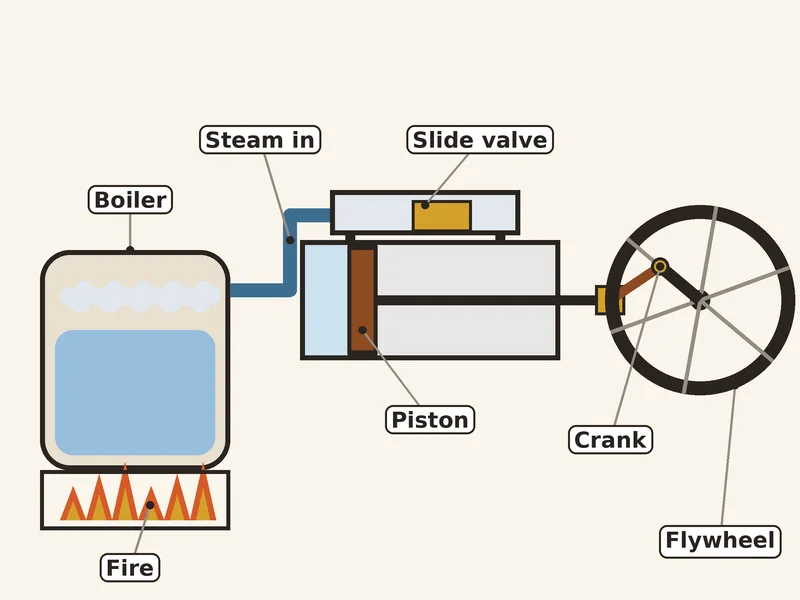
Steam Engine Explorer
Press play and watch the steam go in, push, and get thrown out again. Slow it right down, step it a quarter-turn at a time, switch the labels off and test yourself, or flip to Newcomen’s older engine, where the air does the pushing.
The animation is our own simplified drawing, not to scale. How it works: Encyclopaedia Britannica: steam engine Encyclopaedia Britannica: steam engine Encyclopaedia Britannica: Thomas Newcomen
The short version
A steam engine is a machine that uses steam to do mechanical work, with heat doing the pushing. Encyclopaedia Britannica: steam engine
In a Newcomen engine the air does the pushing: steam is condensed to make a vacuum in the cylinder, and atmospheric pressure shoves the piston down. Encyclopaedia Britannica: Thomas Newcomen
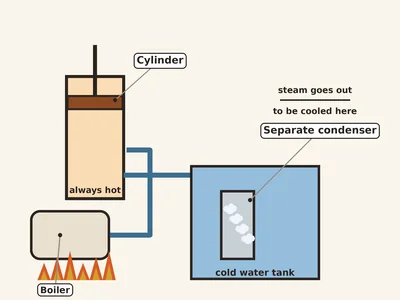
In May 1765 Watt came up with the separate condenser, his first and greatest invention. Encyclopaedia Britannica: James Watt
In the classic engine the piston rod drives a crank on a flywheel, which turns the back-and-forth push into round-and-round motion. Encyclopaedia Britannica: steam engine A flywheel’s inertia resists changes in speed, smoothing out the jerky pushes of the piston. Encyclopaedia Britannica: flywheel
Explore the engines
 How it worksValve, piston, crank, flywheel.
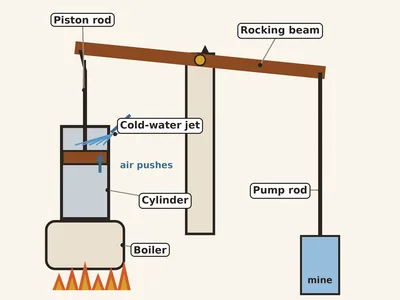 Before WattHero, Papin, Savery and Newcomen.
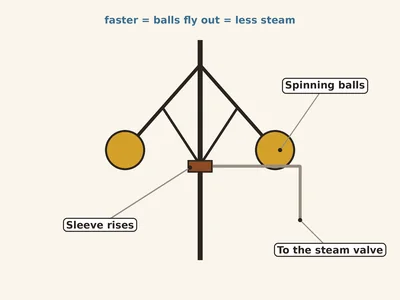
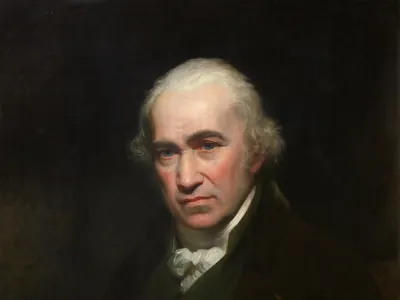 James WattThe condenser, the governor and Boulton.
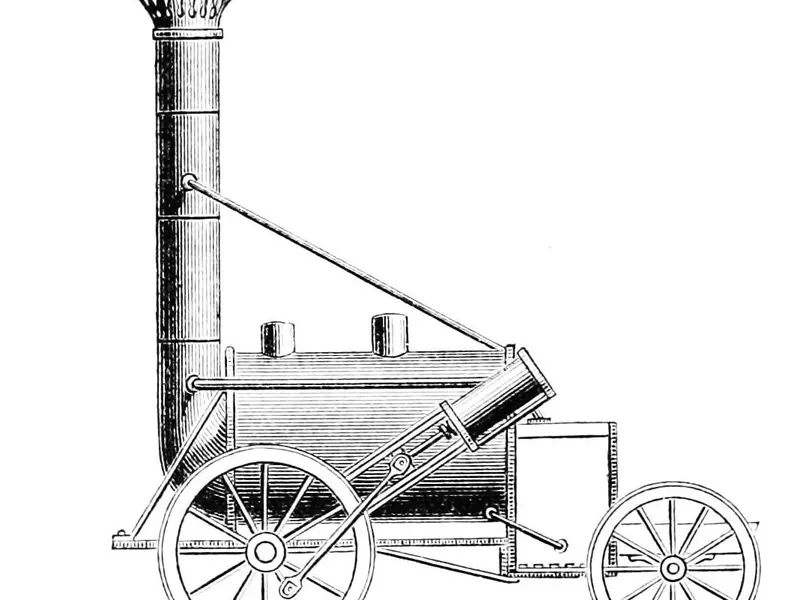
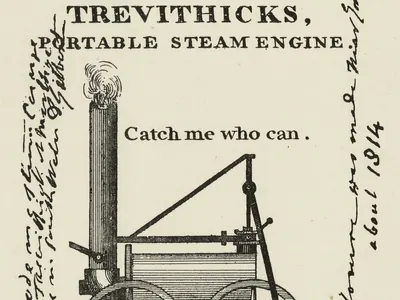
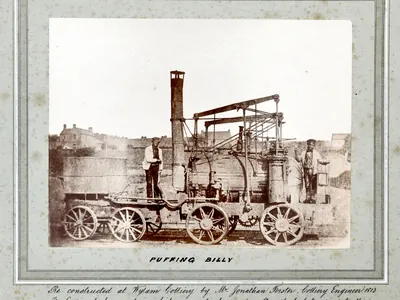 LocomotivesTrevithick, Puffing Billy and Rocket.
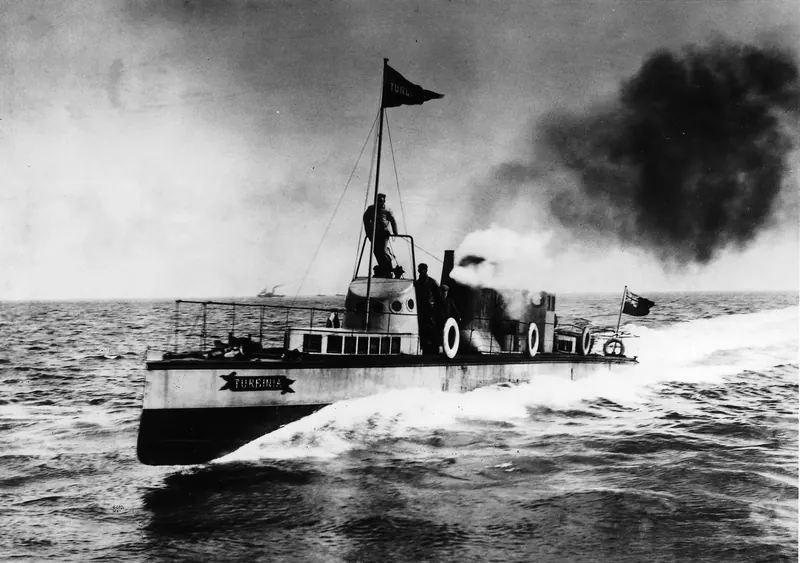
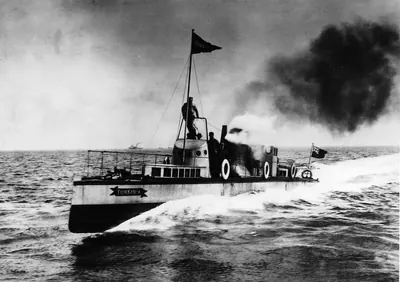 Turbines & shipsNo pistons, very fast.
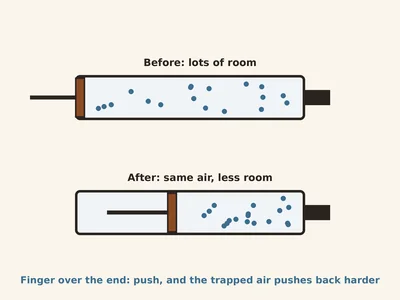 ExperimentsNo heat, all science.
 TimelineFrom AD 62 to 1921.
 Myths vs factsNo, Watt didn’t invent it.
 All the factsEvery fact, every source.
Tile pictures are credited on their pages and on the credits page.
Things to play
- Steam Engine ExplorerRun a double-acting engine and a Newcomen engine, slow or fast.
- Valve MasterYou are the valve. Switch on the dead centre and keep it running.
- Steam TimelinePut six steam moments in order, from Hero to the turbine.
- Steam Engines QuizTen questions at a time, every answer sourced.
- Engine PairsA memory game with our diagrams and old engravings.
Enjoyed the ride? Help keep this site in steam.
This site is hand-built, fact-checked and free to use. If the engine, a game or one of Useless’s notes made you grin, a little support keeps it going and helps the network grow.
Steam engine printables
Fact-checked PDFs in A4 and US Letter, sold as instant downloads from the ReallyByte store.
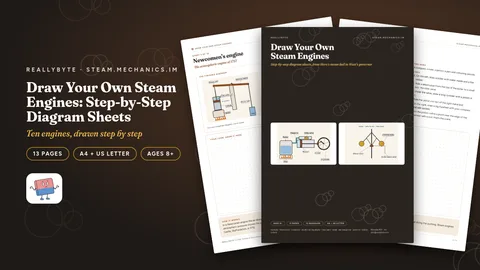
Draw Your Own Steam Engines: Step-by-Step Diagram Sheets
Ten steam engine diagrams to draw with a ruler and compass, from Hero’s spinning ball to Watt’s governor, each with simple steps, a practice grid and how the part works
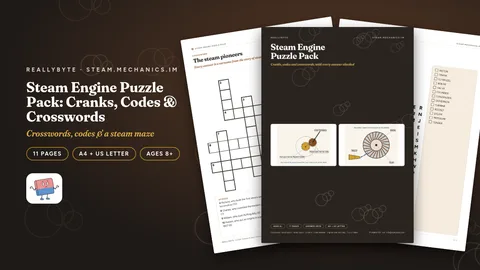
Steam Engine Puzzle Pack: Cranks, Codes & Crosswords
A crossword, a word search, a maze through the boiler, a timeline puzzle, a code-breaker and engine-part matching, all with answer keys
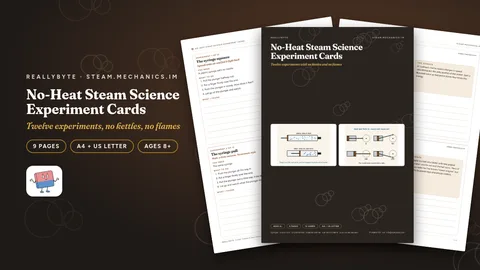
No-Heat Steam Science Experiment Cards
Twelve cards of steam science with no kettles or flames: the syringe squeeze, a card crank, a balloon spinner, the stair-climb horsepower test and more
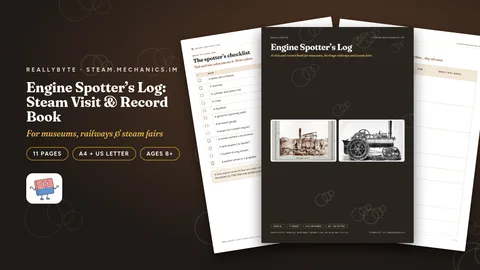
Engine Spotter’s Log: Steam Visit & Record Book
Log the engines you see at museums and heritage railways, sketch the moving parts, time a flywheel and work out your own horsepower
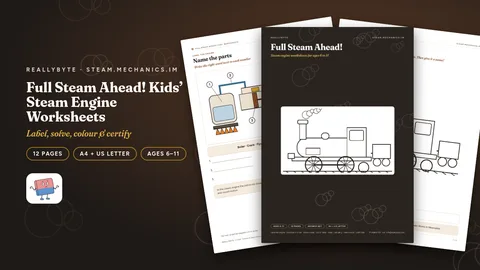
Full Steam Ahead! Kids’ Steam Engine Worksheets
For ages 6 to 11: label the engine, put the inventors in order, steam maths, true or false, a maze and colouring, with answer keys
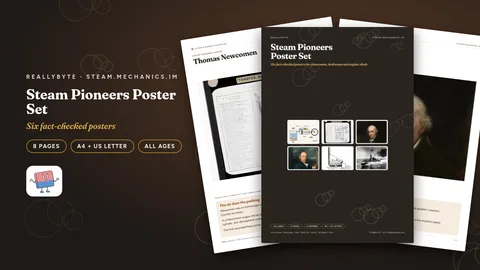
Steam Pioneers Poster Set
Six fact-checked posters: how a steam engine works, Newcomen, Watt, Trevithick, Rocket and the steam turbine
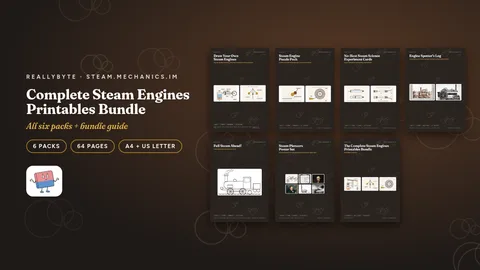 Best value
The Complete Steam Engines Printables Bundle
All six packs plus a guide, A4 and US Letter, in one download.