James Watt and Matthew Boulton
Watt didn’t invent the steam engine. He made it use a lot less coal, made it turn wheels, and then sold it with a man who owned a very big factory.
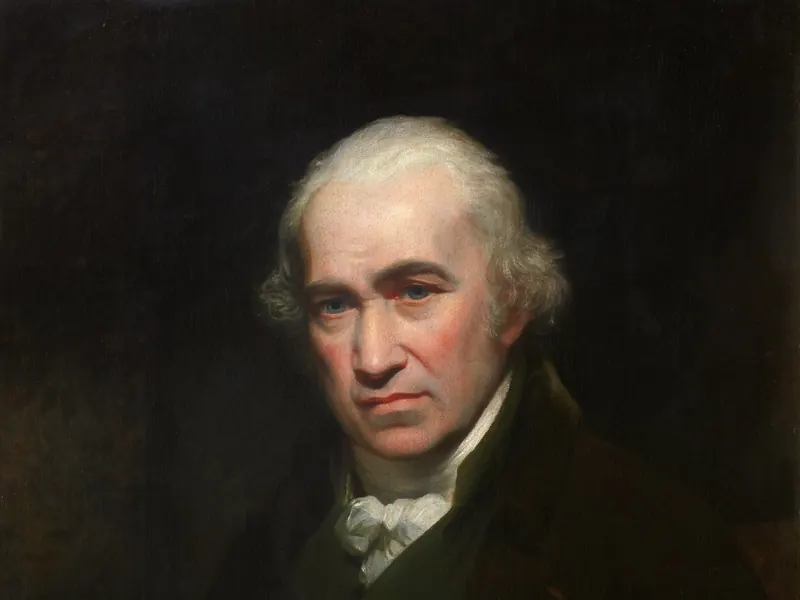
An instrument maker from Greenock
James Watt was born on 19 January 1736 in Greenock, Scotland, and died on 25 August 1819 at Heathfield Hall. Encyclopaedia Britannica: James Watt
At 17 Watt decided to become a mathematical-instrument maker, and in 1755 went to London to learn the trade. Encyclopaedia Britannica: James Watt In 1757 he opened a shop at the University of Glasgow. Encyclopaedia Britannica: James Watt
The separate condenser
In May 1765 Watt came up with the separate condenser, his first and greatest invention. Encyclopaedia Britannica: James Watt
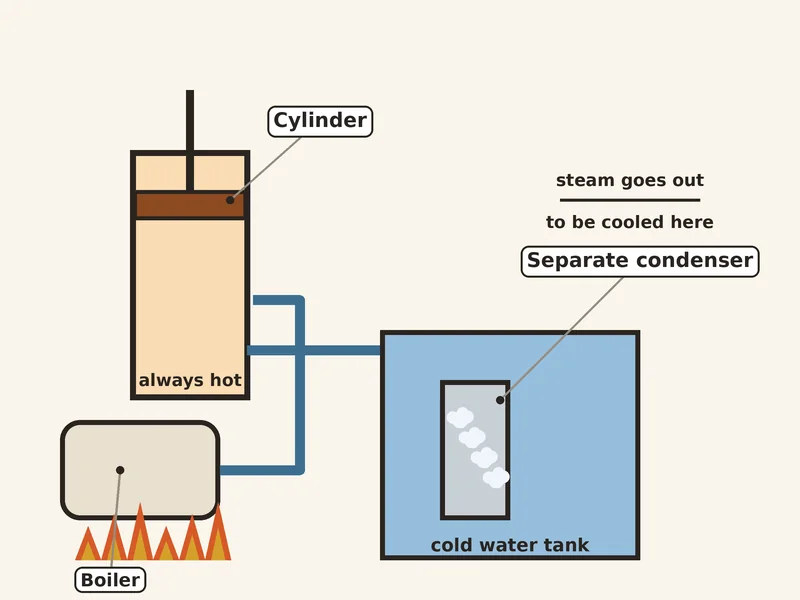
His patent was granted on 5 January 1769, titled “A new method of lessening the consumption of steam and fuel in fire-engines”. Science Museum blog: James Watt and the separate condenser
The Science Museum blog calls the separate condenser the “greatest single improvement ever made to the steam engine”. Science Museum blog: James Watt and the separate condenser Watt’s engines burned two-thirds less coal than Newcomen’s. Science Museum blog: James Watt and the separate condenser
Boulton & Watt
When Watt’s backer John Roebuck went bankrupt in 1772, Matthew Boulton took a share in the patent. Encyclopaedia Britannica: James Watt Boulton met James Watt in 1768. Encyclopaedia Britannica: Matthew Boulton
In 1775 Watt and Boulton began a partnership that lasted 25 years. Encyclopaedia Britannica: James Watt In 1762 Matthew Boulton built the Soho Manufactory near Birmingham. Encyclopaedia Britannica: Matthew Boulton
By 1800 almost 500 Boulton & Watt steam engines had been installed. Encyclopaedia Britannica: Matthew Boulton
In 1786 Boulton put steam power to work making coins. Encyclopaedia Britannica: Matthew Boulton
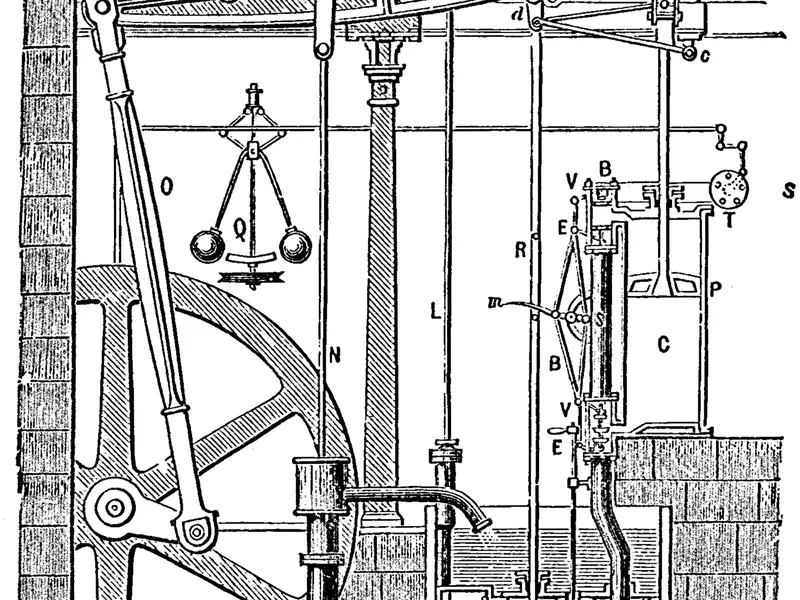
Making it turn wheels
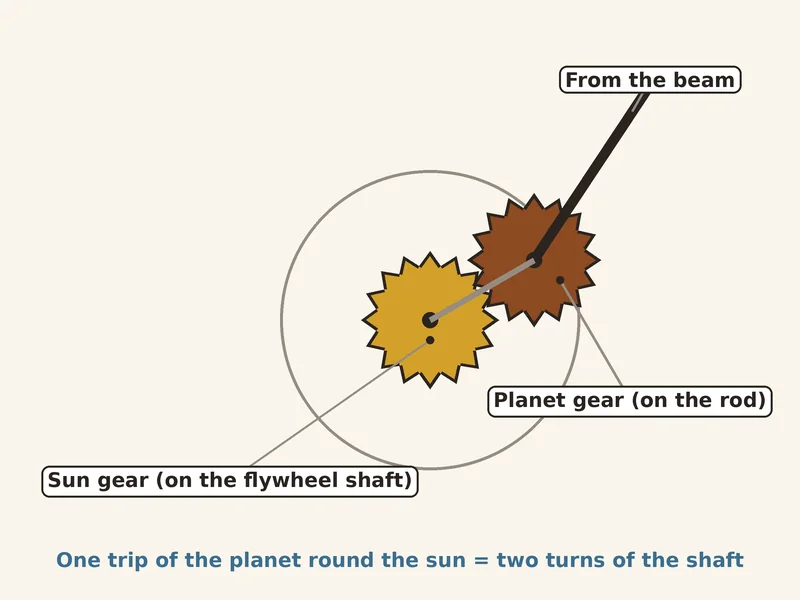
Watt’s sun-and-planet gear (1781) turned a shaft twice for every cycle of the engine. Encyclopaedia Britannica: James Watt
In 1782 Watt patented the double-acting engine, where the piston pushed as well as pulled. Encyclopaedia Britannica: James Watt
Watt called his 1784 parallel motion “one of the most ingenious, simple pieces of mechanism I have contrived”. Encyclopaedia Britannica: James Watt
Watt’s rotary engines drove machines in factories such as cotton mills. Encyclopaedia Britannica: James Watt
Keeping it steady
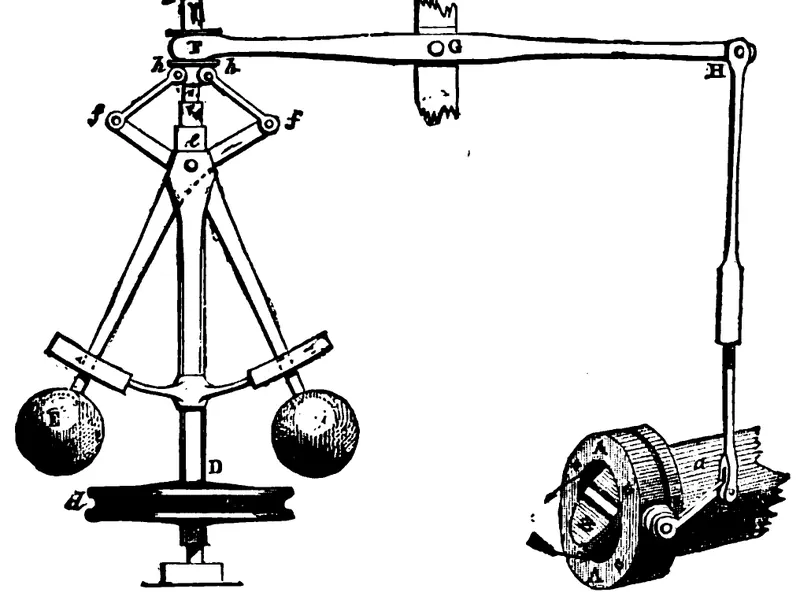
At Boulton’s suggestion, Watt added a centrifugal governor to control the engine’s speed automatically. Encyclopaedia Britannica: James Watt
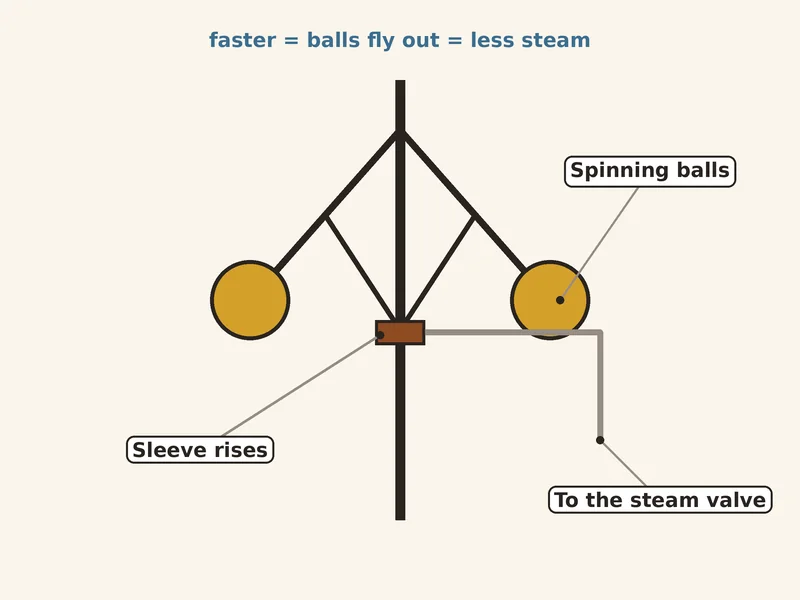
Watt added a flywheel to his engine design in 1788. Encyclopaedia Britannica: James Watt By 1790 Watt had added a pressure gauge. Encyclopaedia Britannica: James Watt
Horsepower and the watt
James Watt fixed the horsepower after experiments with strong dray horses, and his figure is about 50 per cent more than an average horse can keep up. Encyclopaedia Britannica: horsepower
The watt, the unit of power, is named in honour of James Watt. Encyclopaedia Britannica: watt
Fame and fortune
Watt earned £76,000 in royalties. Encyclopaedia Britannica: James Watt In 1785 Watt and Boulton were elected fellows of the Royal Society. Encyclopaedia Britannica: James Watt
Next: locomotives and Rocket →