Hero, Papin, Savery and Newcomen
A spinning toy in Roman Egypt, a pressure cooker, a pump called the Miner’s Friend, and the engine that actually got the job done.
Hero of Alexandria’s steam ball
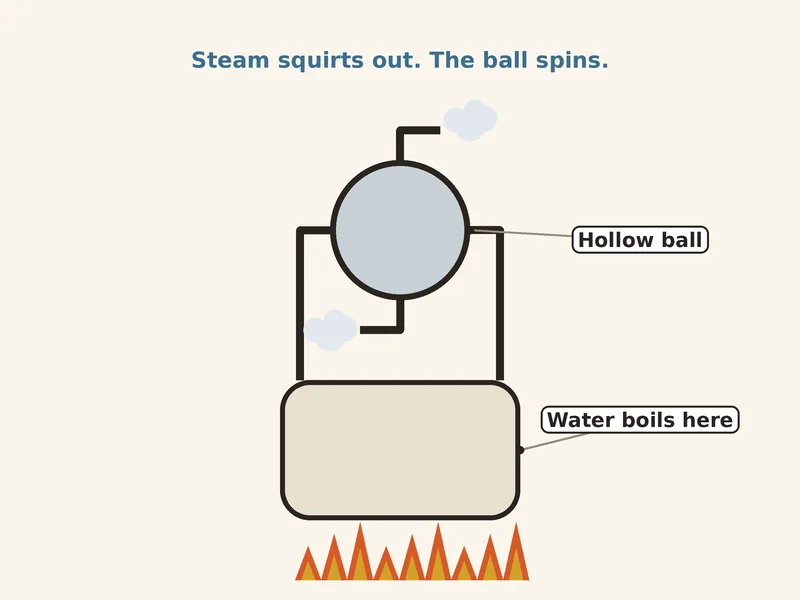
Hero of Alexandria made the first known “steam engine”, but used it only to power toys and amuse visitors. Encyclopaedia Britannica: Heron of Alexandria Hero flourished around AD 62. Encyclopaedia Britannica: Heron of Alexandria
His book Pneumatica describes singing birds, puppets and coin-operated machines, as well as the aeolipile. Encyclopaedia Britannica: Heron of Alexandria
The aeolipile is a ball on a boiler with two angled nozzles: steam squirts out and the ball spins. Encyclopaedia Britannica: Heron of Alexandria
Denis Papin
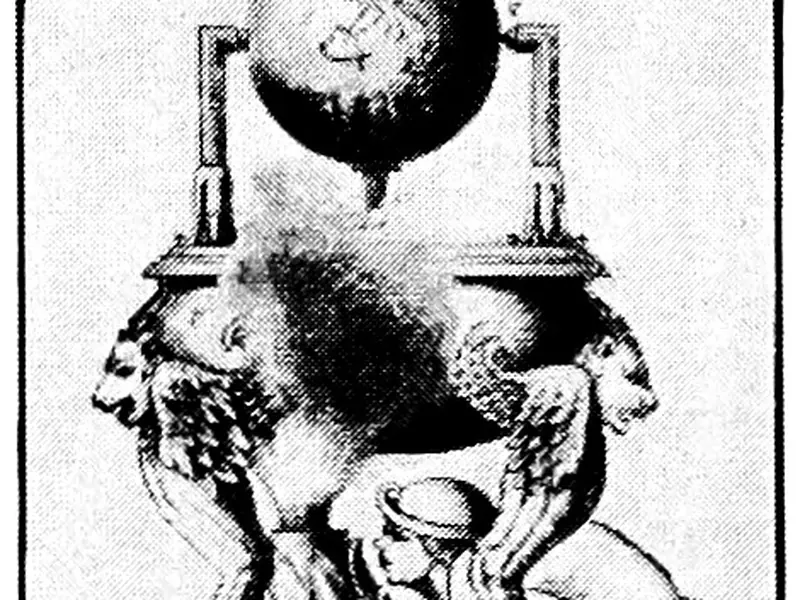
In 1679 Denis Papin invented his steam digester, an early pressure cooker. Encyclopaedia Britannica: Denis Papin
Papin had the idea of steam driving a piston in a cylinder, but never built an engine of his own. Encyclopaedia Britannica: Denis Papin
Thomas Savery and the Miner’s Friend
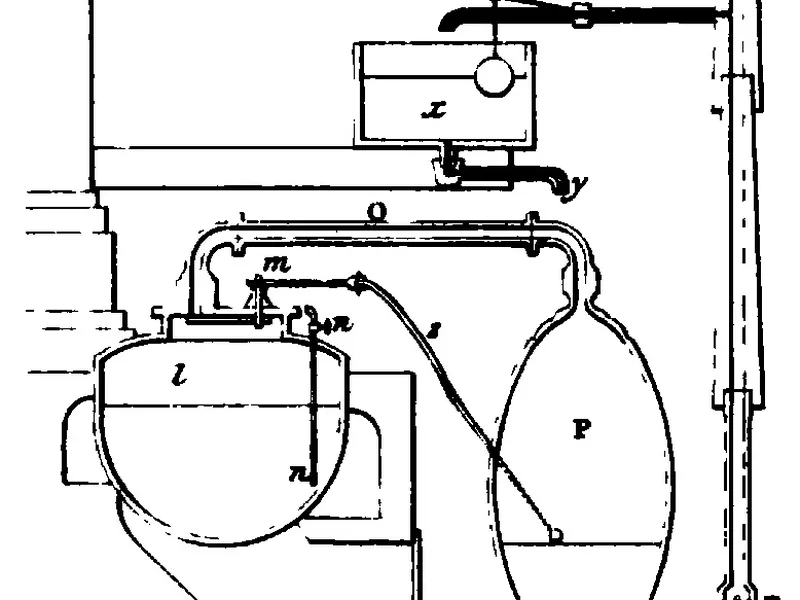
Thomas Savery was born around 1650 at Shilstone in Devon and was a military engineer by trade. Encyclopaedia Britannica: Thomas Savery In 1698 Savery patented a steam pump: a closed vessel filled with water, with steam let in and then condensed. Encyclopaedia Britannica: Thomas Savery
A sprinkler of cold water condensed the steam, making a vacuum that sucked water up. Encyclopaedia Britannica: Thomas Savery Savery’s improved pump used two vessels, so one could fill while the other emptied. Encyclopaedia Britannica: Thomas Savery
Savery’s pump was nicknamed the “Miner’s Friend”. Science Museum blog: In pursuit of power Savery pumps found work supplying water to large buildings. Encyclopaedia Britannica: Thomas Savery
Their weak point was high-pressure steam, above about 8 to 10 atmospheres. Encyclopaedia Britannica: Thomas Savery
Savery also invented an odometer for measuring how far ships had sailed. Encyclopaedia Britannica: Thomas Savery
Thomas Newcomen
Thomas Newcomen was baptised on 28 February 1664 in Dartmouth. Encyclopaedia Britannica: Thomas Newcomen Newcomen was an ironmonger who saw how much it cost to use horses to pump water out of Cornish tin mines. Encyclopaedia Britannica: Thomas Newcomen
With John Calley, a plumber, he experimented for more than ten years. Encyclopaedia Britannica: Thomas Newcomen
The air does the pushing
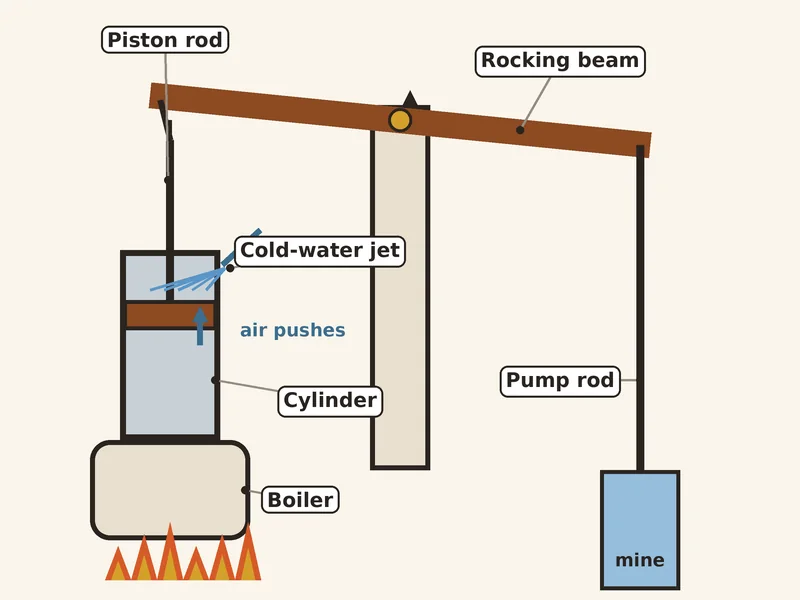
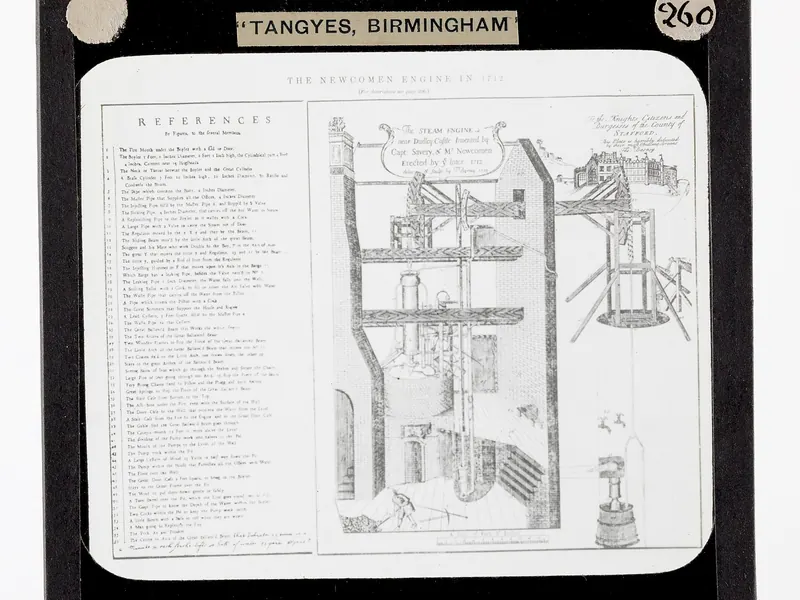
In a Newcomen engine the air does the pushing: steam is condensed to make a vacuum in the cylinder, and atmospheric pressure shoves the piston down. Encyclopaedia Britannica: Thomas Newcomen
Newcomen’s engine had an internal jet condenser and valve gear that worked itself. Encyclopaedia Britannica: Thomas Newcomen
Steam Engine Explorer
Press play and watch the steam go in, push, and get thrown out again. Slow it right down, step it a quarter-turn at a time, switch the labels off and test yourself, or flip to Newcomen’s older engine, where the air does the pushing.
The animation is our own simplified drawing, not to scale. How it works: Encyclopaedia Britannica: steam engine Encyclopaedia Britannica: steam engine Encyclopaedia Britannica: Thomas Newcomen
1712: the big year
The first recorded Newcomen engine was put up near Dudley Castle, Staffordshire, in 1712. Encyclopaedia Britannica: Thomas Newcomen The Science Museum calls 1712 “a red letter year” for steam. Science Museum blog: In pursuit of power
Because Savery held a broad patent from 1698, Newcomen could not patent his own engine. Encyclopaedia Britannica: Thomas Newcomen
Newcomen engines drained mines and raised water to drive waterwheels. Encyclopaedia Britannica: Thomas Newcomen
The Science Museum’s Pentrich engine, an atmospheric engine, was built by Francis Thompson in 1791. Science Museum blog: In pursuit of power
The diagrams on this site are our own, drawn from scratch and simplified so the moving parts are easy to follow (they are not to scale). The engravings, paintings and old photos are public domain, credited under each one and on the credits page.